Tag: Biopharma Perspective
-

AbbVie’s Etentamig Cuts Progression or Death Risk by 60% in Phase 3 Multiple Myeloma Trial
AbbVie’s etentamig met both primary endpoints in the Phase 3 CERVINO trial, achieving a 74.0% objective response rate and reducing the risk of progression or death by 60% versus standard available therapies.
-
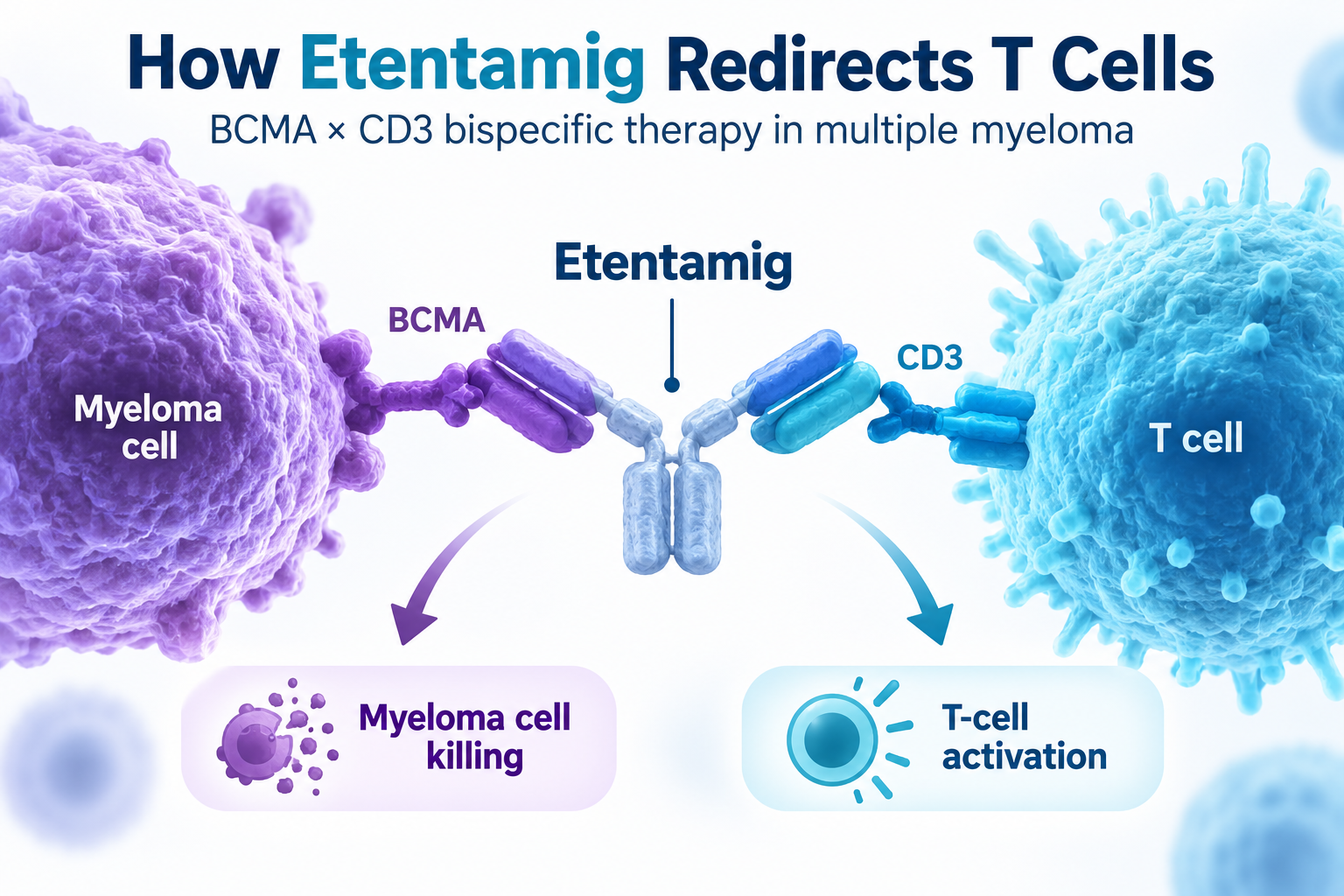
How Etentamig Redirects T Cells in Multiple Myeloma
Etentamig is a BCMA × CD3 bispecific T-cell engager designed with bivalent BCMA binding, low-affinity CD3 engagement and retained FcRn binding to redirect T cells against multiple myeloma cells.
-

How HMPL-A830 Delivers KRAS Inhibition Through EGFR-Targeted Therapy
HMPL-A830 is a preclinical KRAS-EGFR antibody-targeted therapy conjugate designed to bind EGFR-expressing tumor cells, undergo internalization and release a KRAS inhibitor payload intracellularly while also suppressing EGFR signaling.
-

Novartis’ Pelacarsen Fails Phase 3 Lp(a)HORIZON Despite Lowering Lp(a)
Novartis and Ionis reported that pelacarsen lowered Lp(a) but failed to significantly reduce 4-point MACE in the Phase 3 Lp(a)HORIZON trial, raising new questions about the clinical validity of Lp(a) lowering.
-
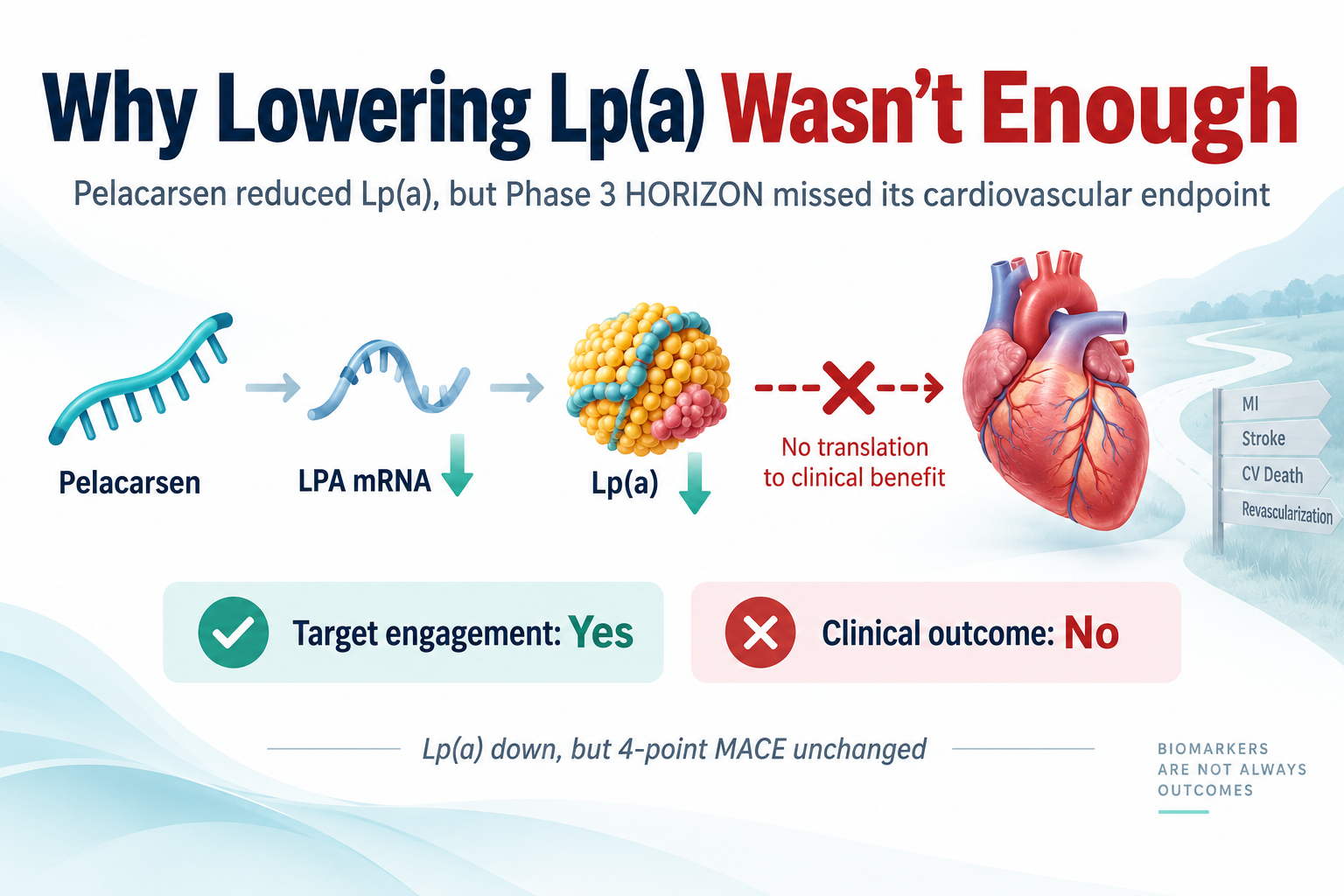
Why Lowering Lp(a) Wasn’t Enough: What Pelacarsen’s Phase 3 Failure Means
Pelacarsen targets LPA mRNA to reduce apo(a) production and circulating Lp(a), but the Phase 3 Lp(a)HORIZON result showed that molecular target engagement did not translate into fewer major cardiovascular events.
-

FDA Approves Ionis’ Zanvastro as the First Treatment for Alexander Disease
The FDA approved Ionis’ Zanvastro as the first treatment for Alexander disease, validating GFAP-targeted antisense therapy in an ultra-rare neurological disorder.
-

Teva’s TEV-‘408 Meets Phase 2a Primary Endpoint in Celiac Disease by Reducing Gluten-Induced Intestinal Damage
Teva’s anti-IL-15 antibody TEV-‘408 met the primary endpoint in a Phase 2a celiac disease study, significantly reducing gluten-induced intestinal damage and limiting intraepithelial lymphocyte expansion versus placebo.
-

How TEV-‘408 May Protect the Intestine in Celiac Disease Through IL-15 Blockade
TEV-‘408 is an investigational anti-IL-15 monoclonal antibody designed to suppress cytotoxic intraepithelial lymphocyte activity in celiac disease. Its Phase 2a results showed reduced IEL expansion and better preservation of intestinal villous architecture during a controlled gluten challenge.
-

Novartis Remibrutinib Delivers Two Phase 3 Wins in Relapsing Multiple Sclerosis
Novartis reported positive Phase 3 results for remibrutinib in both REMODEL-1 and REMODEL-2, with significant reductions in annualized relapse rate versus teriflunomide and no liver safety signal reported across the two studies.
-

How Remibrutinib May Control Multiple Sclerosis Through BTK Inhibition
Remibrutinib inhibits Bruton’s tyrosine kinase in B cells and myeloid cells, suppressing downstream immune signaling without directly depleting B cells. This mechanism differentiates BTK inhibitors from anti-CD20 therapies and may influence both peripheral inflammation and CNS neuroinflammation in multiple sclerosis.