Tag: Biopharma Perspective
-
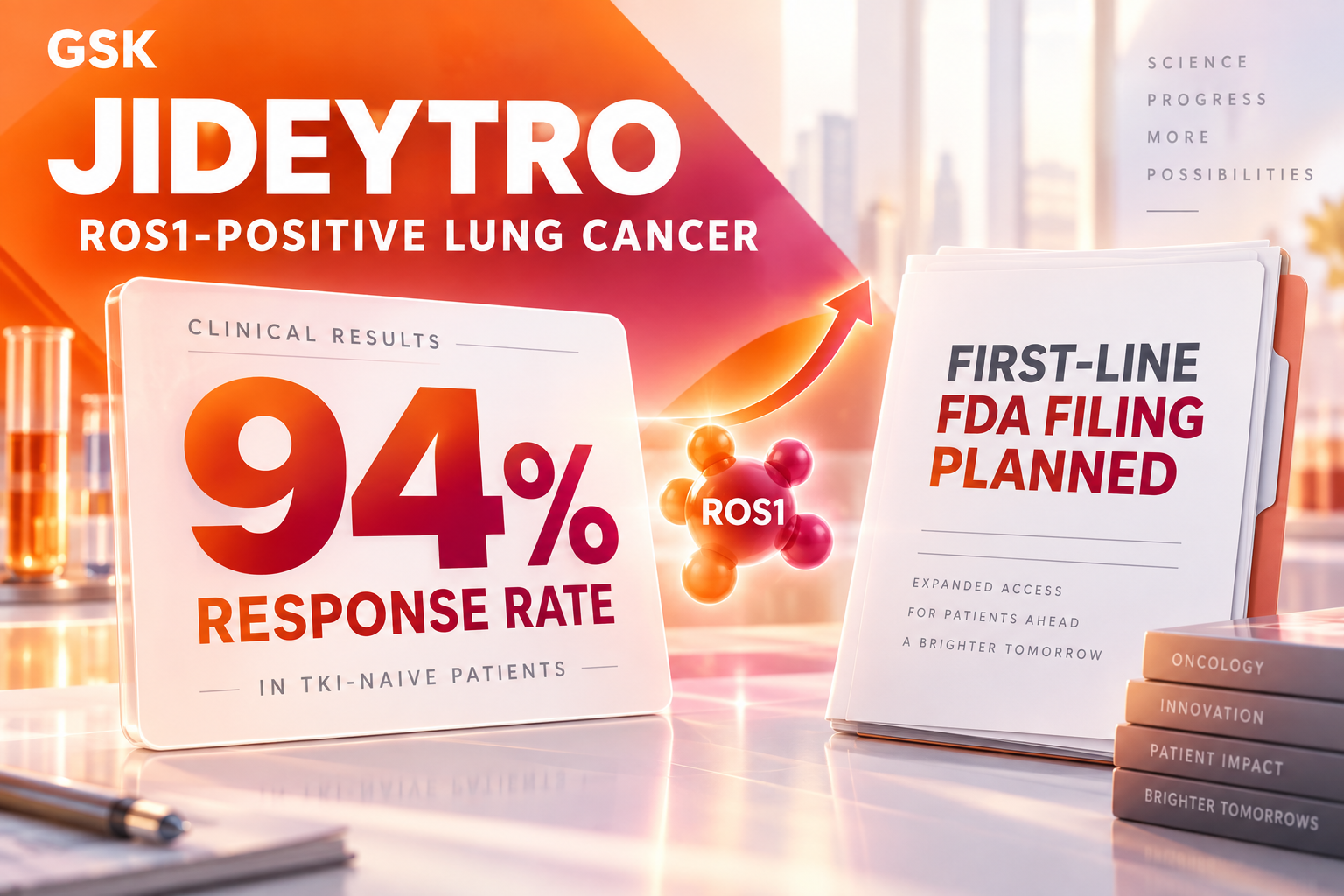
GSK Plans First-Line Jideytro Filing After 94% Response Rate
GSK plans to seek first-line FDA approval for Jideytro after the ROS1 inhibitor achieved a 94% response rate in 94 TKI-naïve patients in the ARROS-1 study.
-
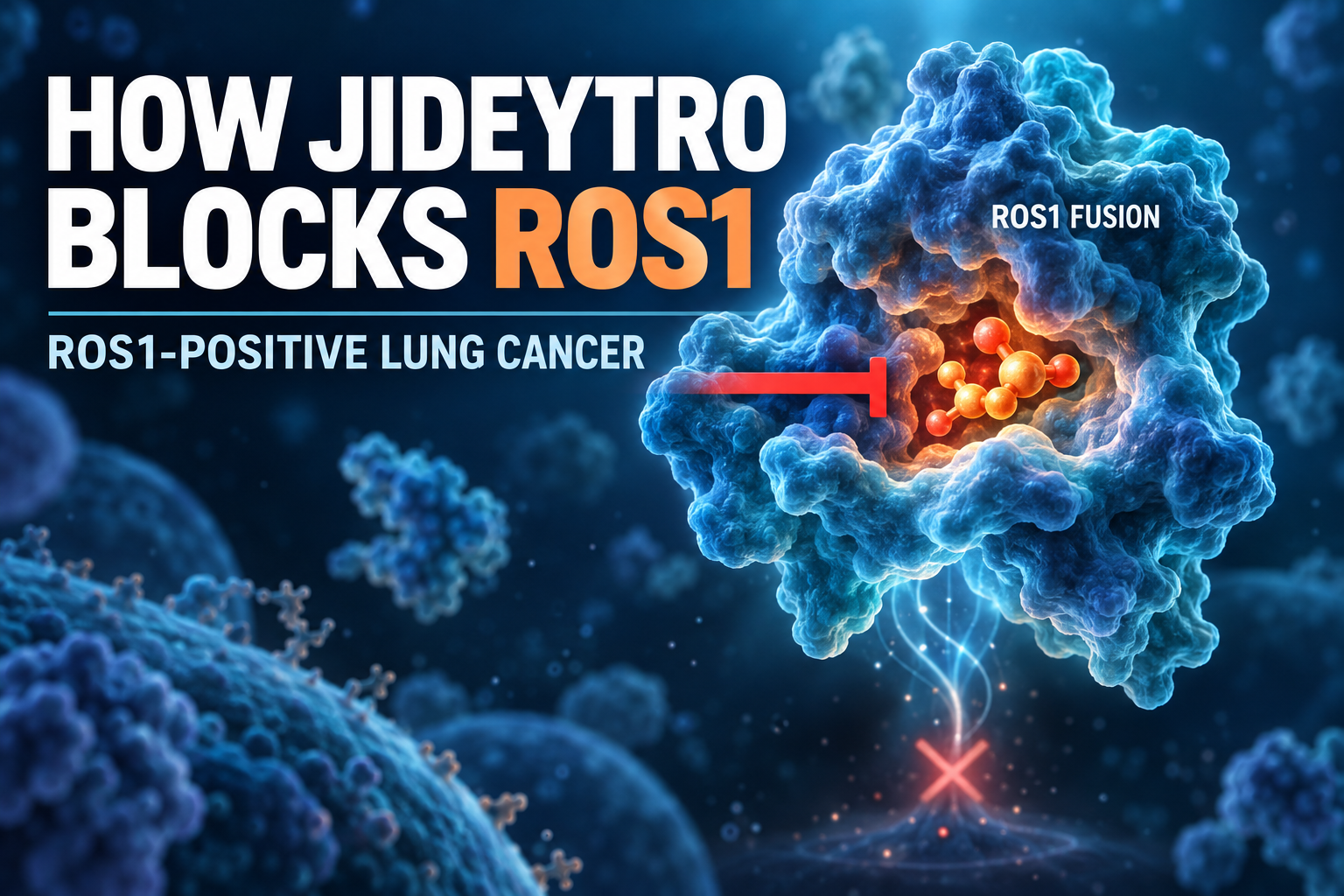
How Jideytro Blocks ROS1 Fusion Signaling in Lung Cancer
Jideytro is a brain-penetrant, TRK-sparing macrocyclic inhibitor designed to block ROS1 fusion signaling and resistant variants such as G2032R.
-

How Qulipta Blocks CGRP Signaling During the Menstrual Migraine Window
Estrogen withdrawal can increase migraine susceptibility around menstruation. Qulipta does not alter hormone levels; it blocks downstream CGRP receptor signaling during this predictable risk window.
-
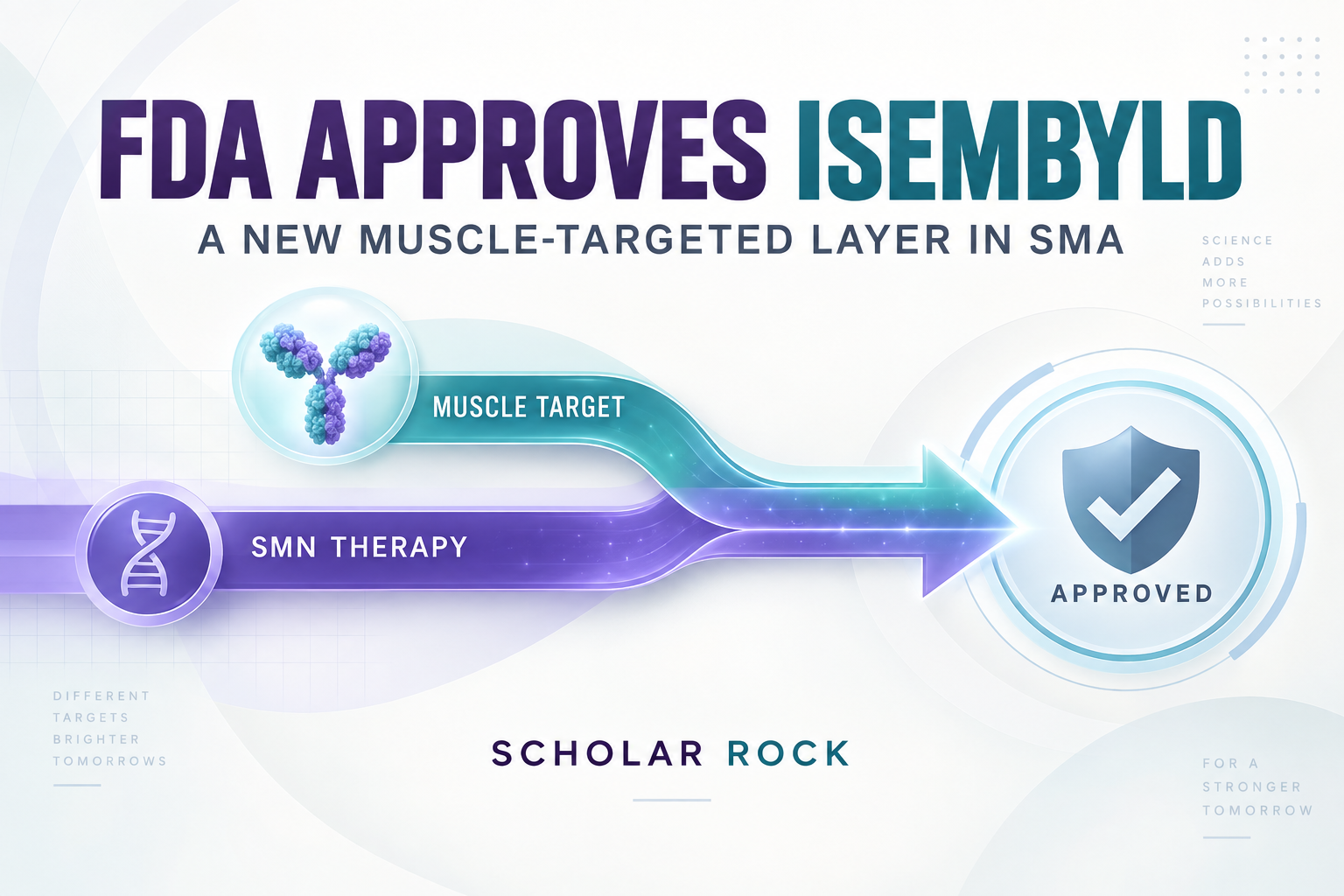
Scholar Rock’s Isembyld Wins FDA Approval for Spinal Muscular Atrophy
The FDA approved Scholar Rock’s Isembyld for patients aged two years and older receiving SMN2-targeted therapy, adding the first muscle-directed treatment to established SMA care.
-

How Isembyld Releases the Muscle-Growth Brake in Spinal Muscular Atrophy
SMA begins with SMN deficiency and motor-neuron loss, but muscle weakness can persist after SMN-directed treatment. Isembyld targets this downstream component by preventing myostatin activation.
-

How Hyrnuo Blocks Mutant HER2 Signaling in Lung Cancer
Activating HER2 mutations can sustain RAS–ERK and PI3K–AKT signaling in lung cancer. This explainer examines how Hyrnuo reversibly inhibits mutant HER2 kinase activity while limiting wild-type EGFR inhibition.
-
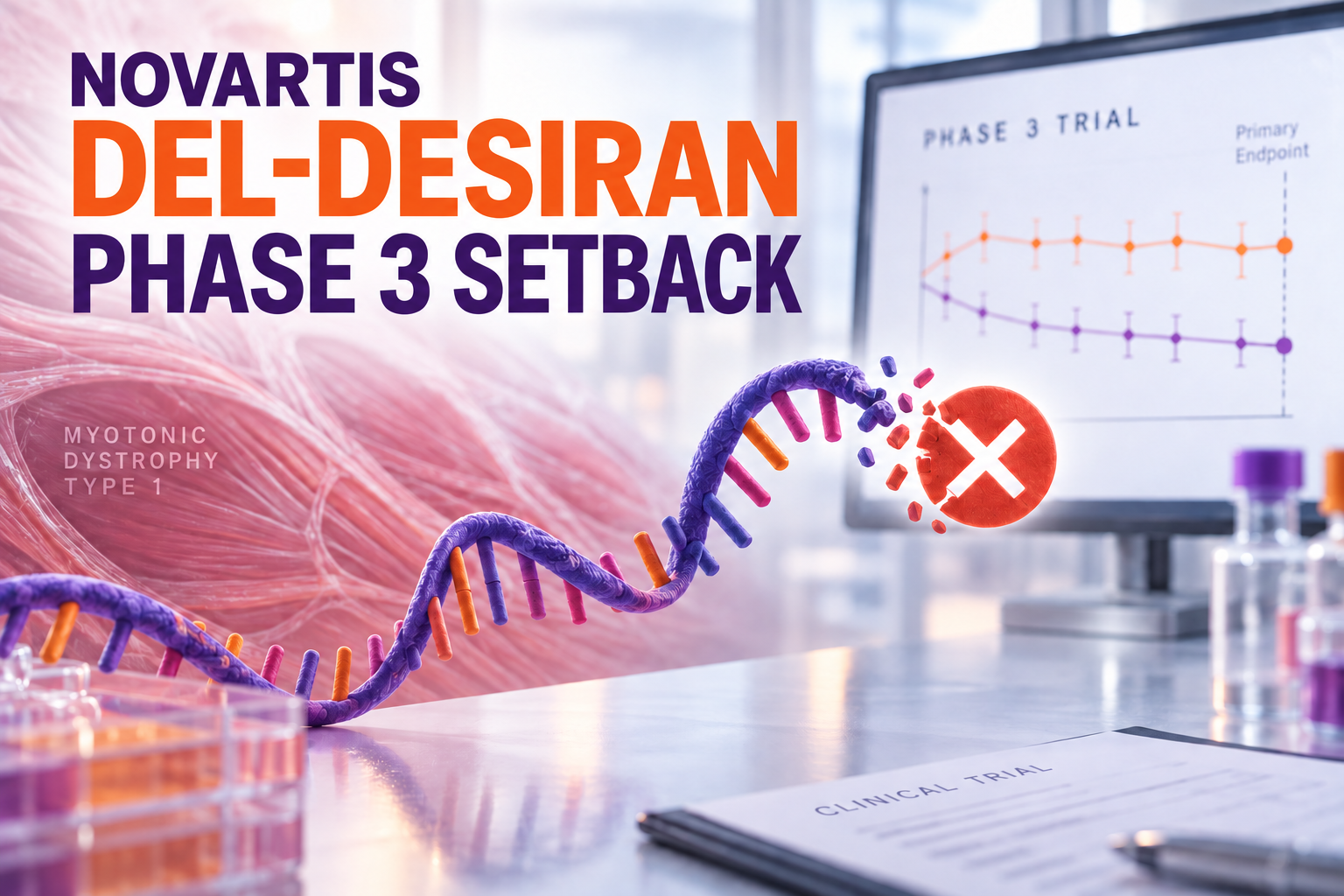
Novartis’ Del-desiran Fails Phase 3, Deepening a Week of Pipeline Setbacks
Novartis’ del-desiran missed the primary endpoint in the Phase 3 HARBOR trial for DM1, raising questions about the $12 billion Avidity acquisition and the clinical translation of its AOC platform.
-
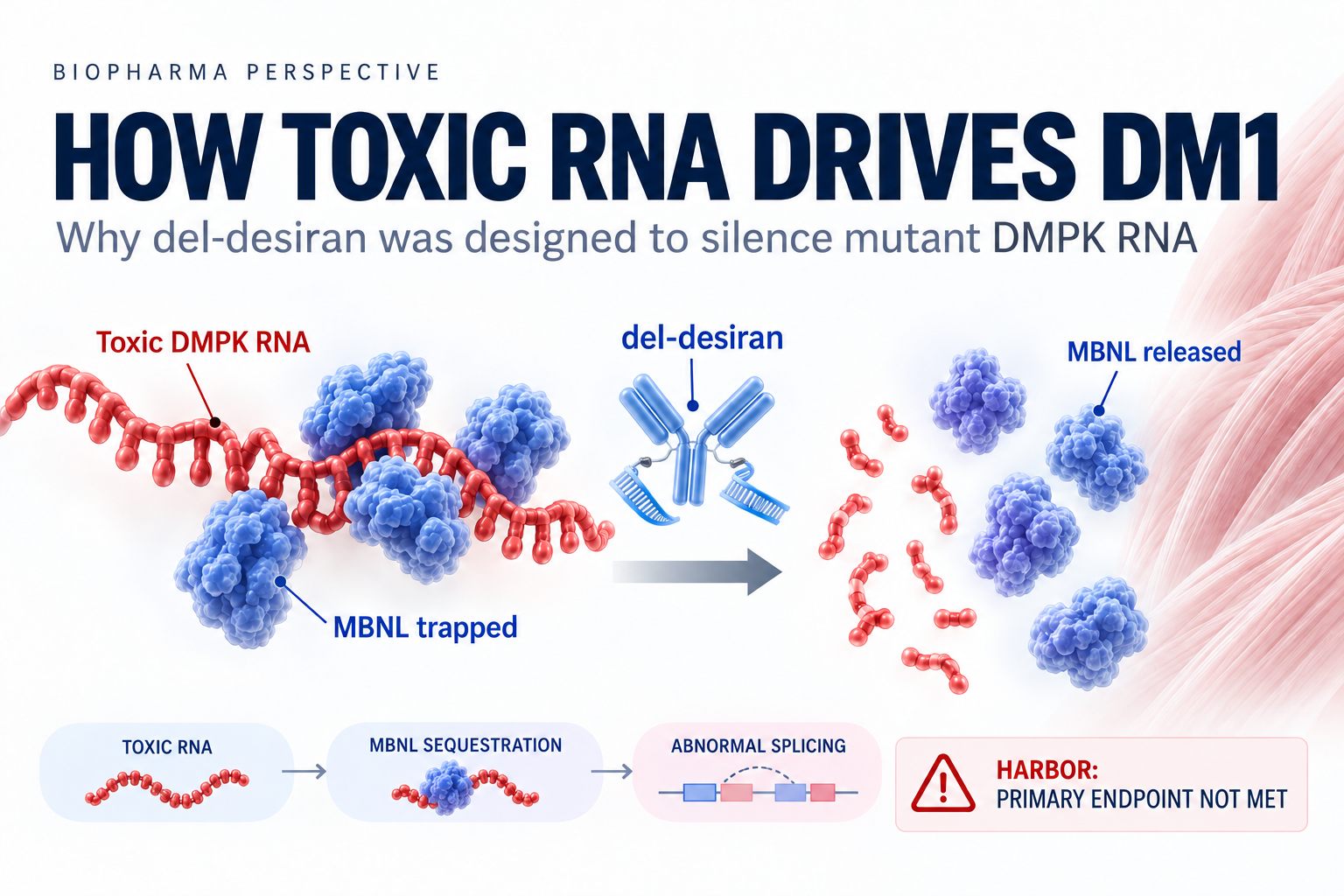
How Toxic RNA Drives DM1—and Why Del-desiran Was Designed to Silence It
DM1 is driven by toxic CUG-repeat DMPK RNA that sequesters MBNL proteins and disrupts alternative splicing. This explainer examines how del-desiran was designed to correct that mechanism—and why molecular improvement did not translate into a positive Phase 3 primary endpoint.
-
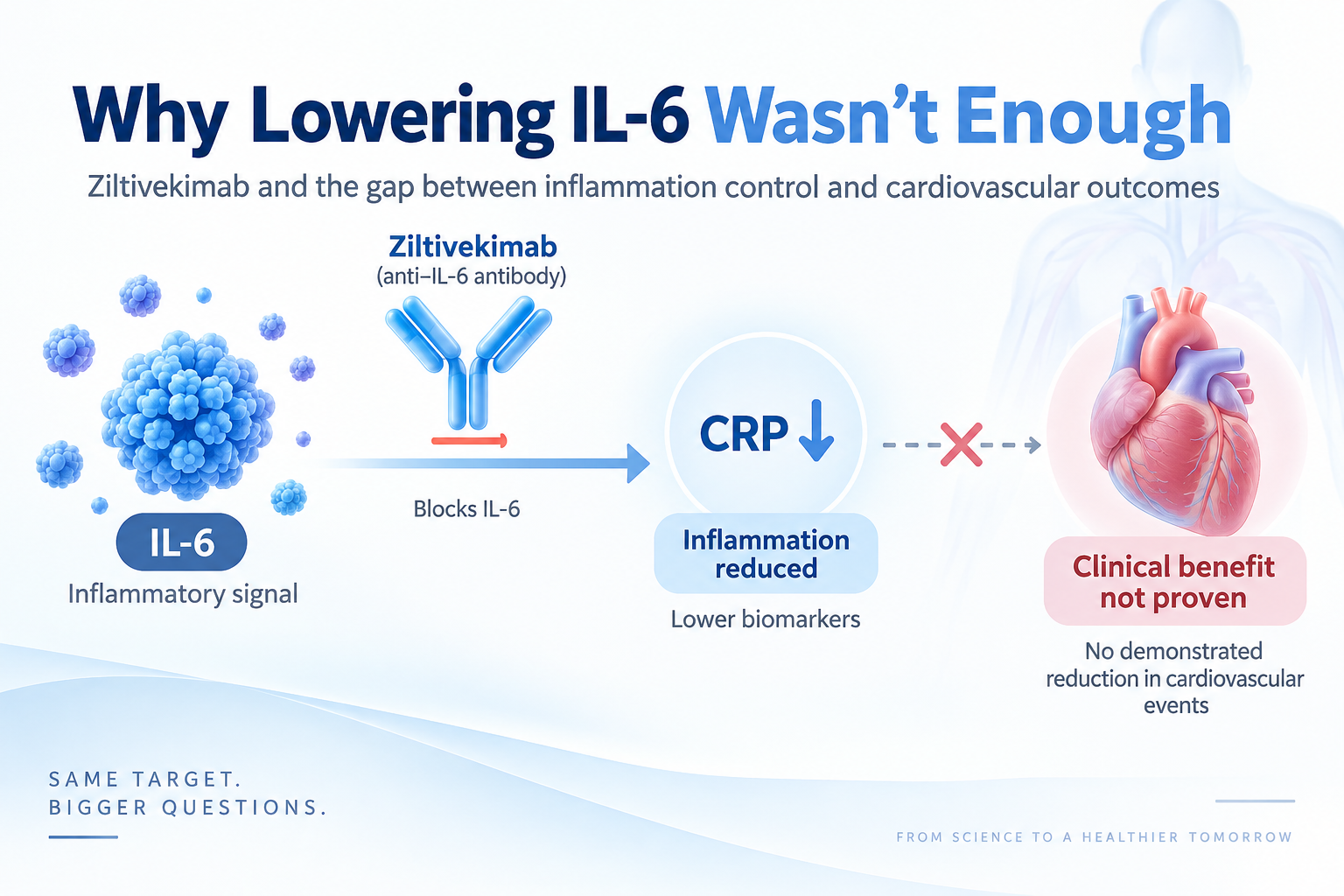
Why Lowering IL-6 Wasn’t Enough: What Ziltivekimab’s Cardiovascular Setback Means
Ziltivekimab neutralizes the IL-6 ligand and suppresses downstream inflammatory signaling, but the Phase 3 ZEUS trial showed that strong reductions in free IL-6 and hsCRP did not translate into fewer major cardiovascular events.
-

AbbVie’s Etentamig Cuts Progression or Death Risk by 60% in Phase 3 Multiple Myeloma Trial
AbbVie’s etentamig met both primary endpoints in the Phase 3 CERVINO trial, achieving a 74.0% objective response rate and reducing the risk of progression or death by 60% versus standard available therapies.